


Forwarded email? Subscribe here to get weekly reflections like this directly.
This note is for you if you’re still doing more than you should—because doing more has always worked for you.
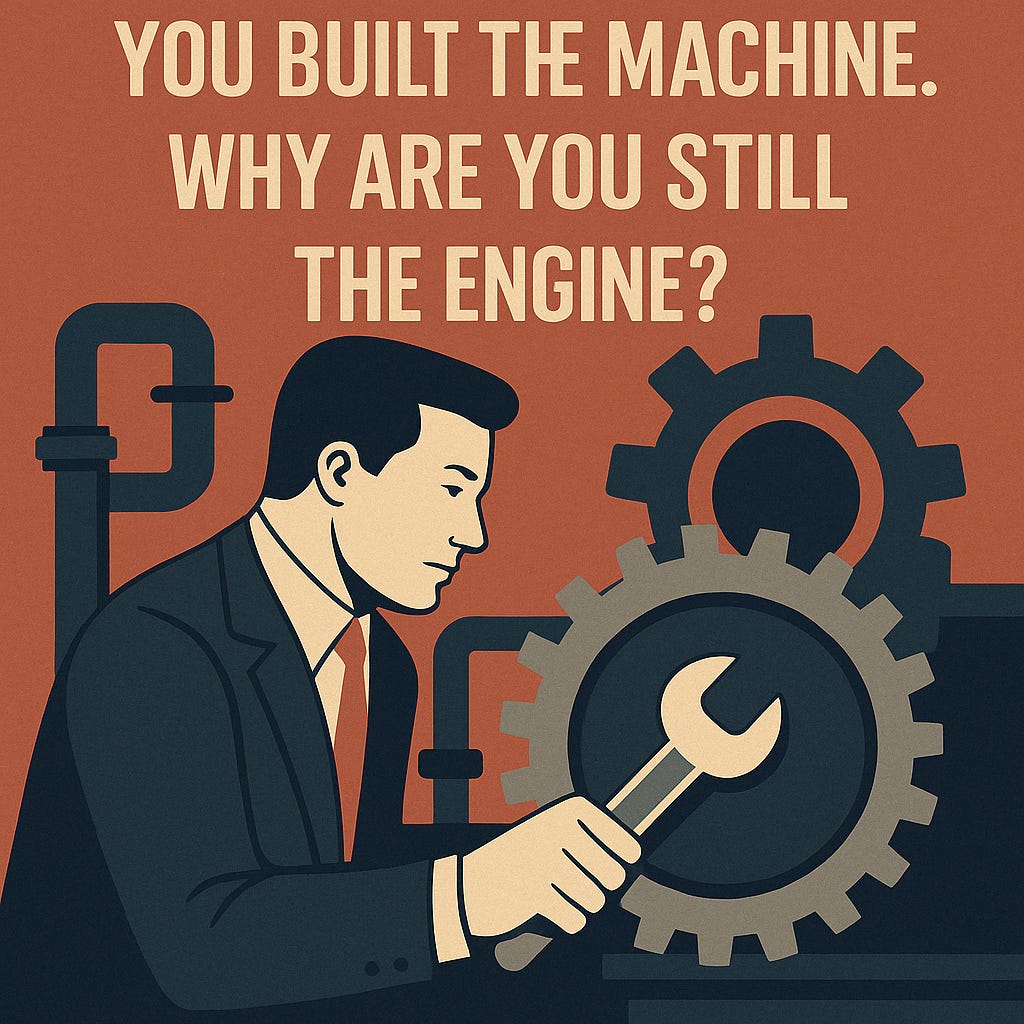
I used to take a strange kind of pride in being indispensable.
In knowing every moving part. In catching things before they broke.
In being the one people had to come to when things got complicated.
But if I’m being honest, it wasn’t just responsibility. It was identity.
I liked being the one who could fix, who could spot the error, who could out-detail the team.
And delegation? That always felt like a compromise.
I told myself it would take longer to explain than to just do it.
That it wasn’t worth risking errors.
That being hands-on meant I was engaged.
But the truth?
There was an addiction to that level of involvement.
An emotional reward in being necessary.
What Changed?
Over 18 years in leadership roles at one firm, I stepped out of several roles.
And every time, I expected the structure to wobble after I left.
But here’s what actually happened:
The team adapted.
The systems flexed.
Things still worked—just differently.
And that’s when it landed:
The version of me who needed to be in the middle of everything…
was no longer the version that needed to lead.
💬 From My Coaching Table
I hear variations of this every week:
“I know I should delegate—but I don’t trust it’ll get done right.”
“Everyone says I’m too involved. But how do I let go without things slipping?”
“They rely on me for everything. And I complain about it. But I also created it.”
High-performing leaders often become bottlenecks—not because they’re controlling…
but because being the engine made them feel secure.
And in doing so, they never actually got to step into leadership.
They just kept executing it, faster than anyone else could.
What You Lose by Staying the Engine
You “overfunction”. Your team “undergrows”.
You measure value by involvement instead of impact.
You miss the larger game while solving smaller fires.
You lead like you're irreplaceable—which means you never actually build legacy.
💡 If This Hits Too Close
Here’s what helped me shift:
I stopped seeing delegation as risk.
I started seeing it as development.I learned that precision isn’t the highest form of leadership.
Influence is.I realized that letting go isn’t losing control.
It’s creating space for something bigger than you.
🤔 Reflection
What do you still do—because it makes you feel relevant?
What would actually happen if someone else took it over?
What are you afraid might break?
And more importantly… what might finally grow?
🔹 Book a Clarity Call
If this stirred something you haven’t quite put into words—let’s talk.
No pitch. No pressure. Just space to reflect on what’s quietly costing you.
Raju Panjwani
Former Morgan Stanley Managing Director | 5X Entrepreneur
I help high-level executives turn decades of hard-won experience into lives and ventures that mean something more—without losing the security they’ve spent years building.
P.S. What part of your leadership are you still holding too tightly—because it once made you feel indispensable?