


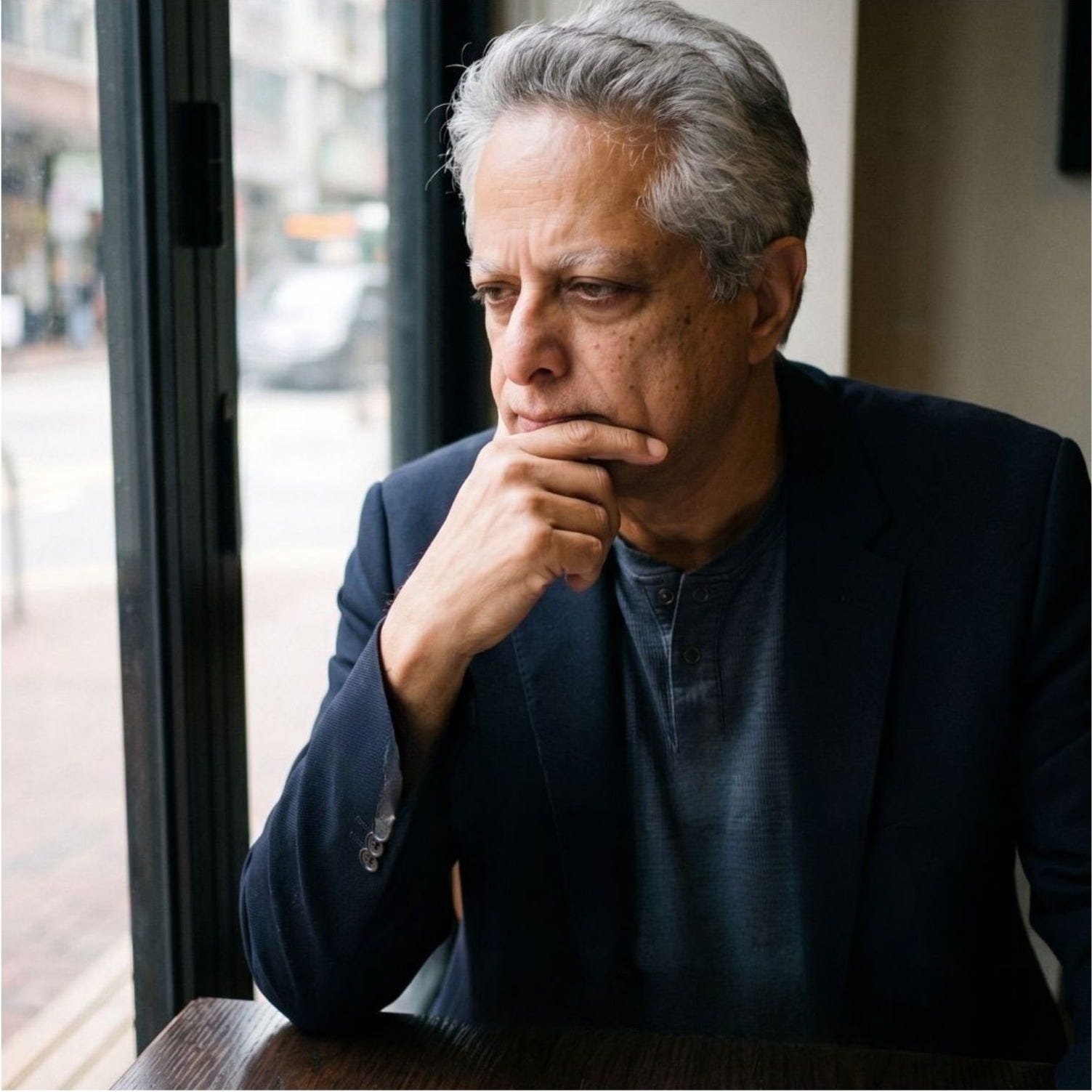
I want to tell you about an afternoon I have not talked about often.
It was somewhere in my 17th year at the Firm. I was sitting in the office in Mumbai, looking out at a city I had once left as a young man with eight dollars in my pocket. I was back in India again after having set up the Firm’s presence a few years earlier.
This time, yet again from scratch, I was setting up our Global Capability Center. While the India business had grown from virtually nothing, including the joint venture, to being a top foreign institution in India, this time the GCC initiative was something close to my heart back in 1997. The Firm had taken a while to green light this project.
What started with four people in early 2003 grew to 400 in just nine months. This was an entrepreneurial venture for me within the company because I was supposed to have some equity in this, with a verbal agreement to spin it out.
By any external measure, I had reached the top of an arc I had been climbing for almost two decades. The recognition was real, the compensation just enough so I wouldn’t quit, and the work itself mattered to people whose work mattered to me.
That afternoon, looking out the window, I felt something I had no language for at the time.
I felt strangely far away from the man sitting in the chair.
What I was experiencing was subtler than unhappiness, with no regret inside it and nothing in it that would have looked like a crisis to a colleague or a board. It was closer to a quiet recognition that the man running that office had been built for a younger man’s plan, and that the rewards of having reached it were no longer answering the question that had been driving me underneath.
I did not act on it for a long time. I did what most successful people do when something inside begins to shift.
I worked harder, kept moving and assumed the feeling would pass.
It did not.
That afternoon is the reason I want to talk about something today that almost no senior executive I work with says out loud.
The most successful people I know are often the ones carrying the questions they don’t say out loud.
Not all of them. But many of them. And almost none of them have the language for it, because the language is not available in the meetings where they spend most of their time.
By the time someone reaches a senior role at a serious firm, they have been rewarded for years, sometimes for decades, for being the person in the room with answers. The team takes its temperature from how the leader walks in on a hard morning. Difficult conversations get held inside the calm the leader has learned to project, even on days when there is no calm available internally.
Over time, that posture stops being a role someone steps into for a meeting and becomes something closer to an identity.
An identity with very little tolerance left in it for not knowing.
Here is what is rarely said.
The higher anyone climbs in any organization, the smaller the circle of people still positioned to ask the questions that matter most.
Peers are usually busy with their own competition.
The team depends on the leader to keep moving, so they need steadiness rather than searching.
Family at home does not always have a frame for the texture of what gets carried in the door at 8 PM on a Tuesday.
Old friends are someplace else in their own lives by now, and the connections with them have thinned.
Even a good coach can be trained more in sharpening strengths than in sitting beside the parts of someone that have never quite been spoken with out loud.
So the motion continues. The calendar fills the moment any space opens in it, the next number gets hit and the next reorganization gets handled.
Somewhere underneath all that motion, a quieter voice begins to ask a question for which there is not yet any language.
Is this still the life I want?
What I have come to understand, both in my own life and in those of the senior leaders I now coach, is that the question on the inside almost always arrives years before the answer on the outside.
By the time the title and the compensation have reached levels that would satisfy the person someone used to be, the person they are becoming has usually been wondering about a question for some time.
The longer that question goes unanswered, the more the experience starts to feel like being lost in plain sight.
There is a line I think about often.
It is attributed to John Gutfreund, who once ran Salomon Brothers. Speaking about his traders, he said, “We pay them just enough so they will not quit.”
It was meant as a comment on compensation strategy. I have come to read it as a description of something much larger that happens inside many successful careers.
A person can be paid, recognized, promoted and respected at a level that is just enough to keep them from leaving, while still falling well short of what would actually give back what they may have lost along the way.
That is the quiet experience many accomplished people are sitting with.
Nothing visible has gone wrong. From the outside there is no crisis a colleague or a board would even notice. The outer life is working well enough to keep them in place, while not yet being honest enough with them to tell them what might set them free.
If something in this essay is landing, here is the thought I want to offer.
The feeling of being lost while looking successful is rarely a sign that something is wrong with you.
More often it is a sign that you have grown beyond the structure of the life you built, and that structure has not yet caught up to who you are becoming.
That is a better problem to have than most of the alternatives. The job rarely needs to disappear. What is usually being asked for is a different kind of conversation than the one your calendar has been having with you.
The leaders I see making the most thoughtful next moves are the ones who stop trying to solve the feeling and start trying to understand it. They allow themselves to ask questions they have been postponing for years, and they give themselves permission to be a beginner again in the part of their life that matters most to them now.
You may not need to change anything visible.
What you may need is to stop being the only person in your own life who is not allowed to wonder.
Where Do You Actually Stand?
This Friday I am releasing the next short conversation on the Bold Conscious Connections podcast, where I sit with the version of this question senior leaders rarely say out loud.
If something in this essay is asking something of you, and if you want a sharper read on whether the next move you are weighing is external or internal, the Career Crossroads Quiz is sitting where it has been. Five minutes. It will not fix anything. It may show you which crossroad you are actually standing at.
The most expensive move you can make is the one where you change everything around you and nothing inside you.
Take the Career Crossroads Quiz. Five minutes may give language to something you’ve been holding on to for years.
You will thank me later.
Sincerely yours
Raju
Raju Panjwani
Former Morgan Stanley MD | 6X Entrepreneur
I guide executives who’ve mastered execution to break through to strategic leadership.