


Back in the mid-90s, I was the COO of my former Wall Street employer in Bombay. We were building the firm’s first full presence in India.
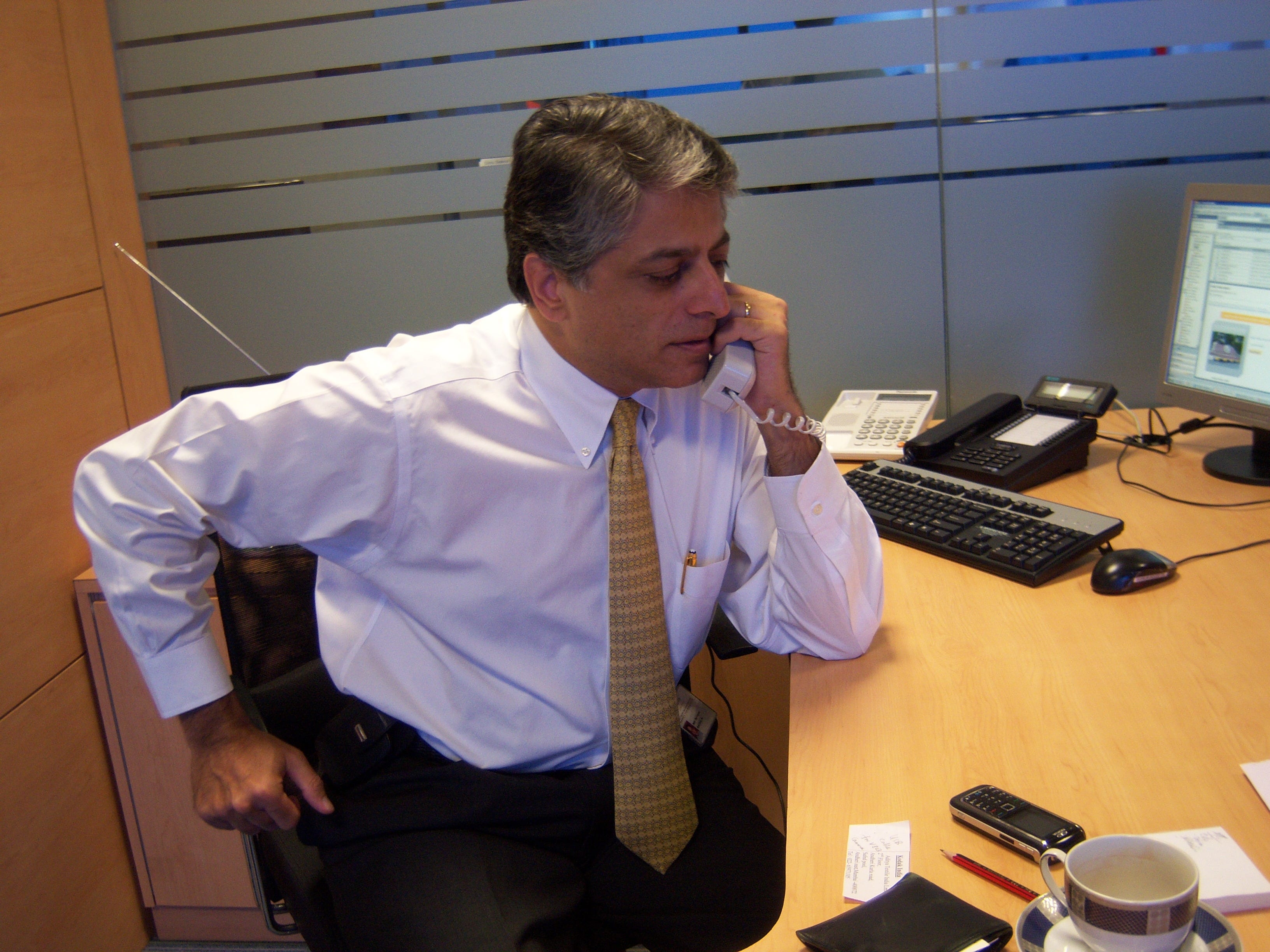
For more than a year, I had no idea how I was being perceived in this culture in which I was raised as a child, but was completely layered by a swag of 16 years of New York work culture. So at the time, the Indian culture felt new and uncomfortable. If I thought of myself as reserved in New York, then in India I was even more so. At work, I was focused. Not unfriendly - just not the kind of person who filled a social occasion with noise. Kim, my fiancée at the time and an “interculturalist” finishing her doctorate at Columbia, saw what I could not. She told me that people in those settings were not reading me as reserved. They were reading me as arrogant.
I was stunned.
What she told me next stayed with me for the rest of my career. When you focus on yourself - on how you are coming across, on what to say next - the people around you feel it. They may feel like you are not interested in them. The shift was this: ask them something real. “Focus on them, not on yourself”, she would say.
I had been a senior officer at one of the world’s most respected firms. I had built a team from scratch. I had earned the title. And I had spent the entire time without knowing something basic about how I was experienced by the people around me.
That was the gap. Not a skill or knowledge gap, but the one between how I experienced myself and how I actually showed up.
That experience happened in my forties. The leaders I work with today - senior executives at IT services and technology consulting firms, twenty-plus years into careers they have genuinely earned - are sitting in a version of the same gap. Only now, the environment has removed the lag time that used to keep it hidden.
Three things happening in 2026 have made this gap impossible to defer.
Infosys, TCS, and Wipro have collectively scaled Microsoft 365 Copilot past 300,000 employees in under six months, with TCS reporting 20 to 25 percent productivity gains in research and content work. When AI handles the output your team used to produce, what becomes visible is how you think, how you respond under pressure, and what you are like to be around when the answer is not on the slide. None of that can be automated. All of it is being watched.
The Conference Board found that AI can now replicate 90 percent of what managers have traditionally done in routine performance development. What remains is the work that requires a human who has done hard things and can sit with another human who is doing them now. That work runs entirely on self-awareness.
CEO confidence dropped to 47 on the Conference Board’s Q2 2026 index, down 12 points from Q1. When pressure increases at the top, it moves downward. The senior leaders absorbing that pressure from both directions - board above, delivery teams below - are the ones whose reactive patterns show up fastest. Self-awareness is what catches that response before it runs the meeting.
When the pressure changes shape, the reactive self takes over
Here is what I’ve seen happen across a decade of coaching senior leaders in services firms.
The track record is real. The relationships exist. The title is well-earned.
Then the pressure changes shape. Clients want different conversations. The board is asking new questions. The team is watching in a way that feels more uncertain than before.
The “experienced” move is to work harder. Reassert what has worked before. Protect what has been built.
The gap keeps widening.
Capability was rarely the problem. The degrees, the domain expertise, the track record: those were real. What was missing was something that cannot be credentialed.
The capacity to see yourself clearly, in real time, while the pressure is on.
The conversation around AI has focused almost entirely on skills: what tools to learn, how to integrate AI into delivery, how to protect relevance by adding new capabilities on top of what you already do. That conversation is incomplete at the executive level.
When clients start expecting strategic conversations from someone who built a career on technical delivery, the first thing activated is not a skill gap. It is a fear response. A fear response in a senior leader almost never looks like fear. It shows up as defensiveness. Over-explaining. Difficulty delegating to people who think differently. An inability to sit in ambiguity without filling it with the wrong answer.
Self-awareness is what lets you catch that response before it takes over.
What most leaders call self-knowledge is not self-awareness in practice
Many high performers know things about themselves. They have taken the assessments, had the 360 or some form of performance reviews, and can articulate their leadership style pretty well.
What most have not done is close the gap between what they know and how they behave under pressure.
Knowing that you tend to become directive under stress is different from catching yourself being directive in a meeting that called for listening, and choosing differently in real time. The first is self-knowledge. The second is self-awareness in practice. That second thing is a trained capacity, not a personality trait you either have or do not.
One of the leaders I work with came in with a clear pattern. In client meetings where the conversation moved toward AI strategy, he would get quiet, then pivot back to what his team had delivered technically. The client always left seemingly satisfied. The conversation never elevated to where it needed to go. His own read was that he was managing expectations well.
What was actually happening was that he was avoiding a conversation that made him feel exposed.
Six weeks in, he said it himself: “I’ve been staying in my lane because I was afraid there was no other lane.”
That sentence cost him something to say. It was also the beginning of everything that changed after. By month six, clients were describing him differently. One said: “He used to give me answers. Now he helps me think.”
That shift was internal. Not a technical one.
The pattern that leadership development often misses
This is where most programs fall short. They teach frameworks. They teach language. They do not train the real-time capacity to observe yourself from the inside while the meeting is still happening.
A hard conversation that needs to happen gets postponed. Not because the leader lacks courage, they have demonstrated plenty of it across their career. It gets postponed because having it honestly would require acknowledging something they have not been willing to look at yet.
One leader I worked with spent 18 months avoiding a difficult conversation with a direct report. He had the data. He knew what needed to happen. He kept finding reasons to wait. What surfaced in our work was that having the conversation honestly meant acknowledging something he had allowed to go on far too long. Once he saw that clearly, the conversation happened within two weeks. The relationship steadied. Something shifted in how his entire team experienced him.
Self-awareness does not replace capability. The domain knowledge, the strategic fluency, the capacity to carry a client conversation about where the industry is heading, that work is real and ongoing. When you know yourself well enough to lead from your considered self instead of your reactive self, all of that capability has a better vehicle. The conversations run deeper. The trust builds from a different place: with clients, with teams, with the people who decide whether you are the person they bring to the table when the problem is hard.
The leaders who will be most valuable through this period are not necessarily the ones who know the most. They are the ones who lead from the clearest internal position. Clients feel that from across a table. A team feels it before the meeting starts.
Three questions worth sitting with
One. In your last difficult conversation with a client or a direct report, what version of you showed up: the considered self or the reactive one? If you are not sure, you have your answer.
Two. What do you consistently avoid in conversations where you feel exposed? Name the pattern, not the person who triggers it.
Three. If the people who work closest to you were to describe how you behave when pressure is highest, would that description match how you see yourself? The gap between those two is the work you need to consider doing.
If these questions surface something you have been struggling with, comment below or reply to my email with the word diagnostic. I will send a link to a free 30-minute private conversation. Just the questions that help you see what is in front of you.
Raju Panjwani
Founder, Live Masterminds, Inc. | Former Managing Director, Morgan Stanley |
I work one-on-one with senior leaders at IT services and technology consulting firms who are ready to lead at the level the business now requires.
LinkedIn