


👉 If this was forwarded to you, subscribe here to get these weekly essays directly, Subscribe
I’ve shared this story before, but not like this.
I grew up lower middle class in India. We weren’t starving, but everything was measured. Electricity. Food. Dreams.
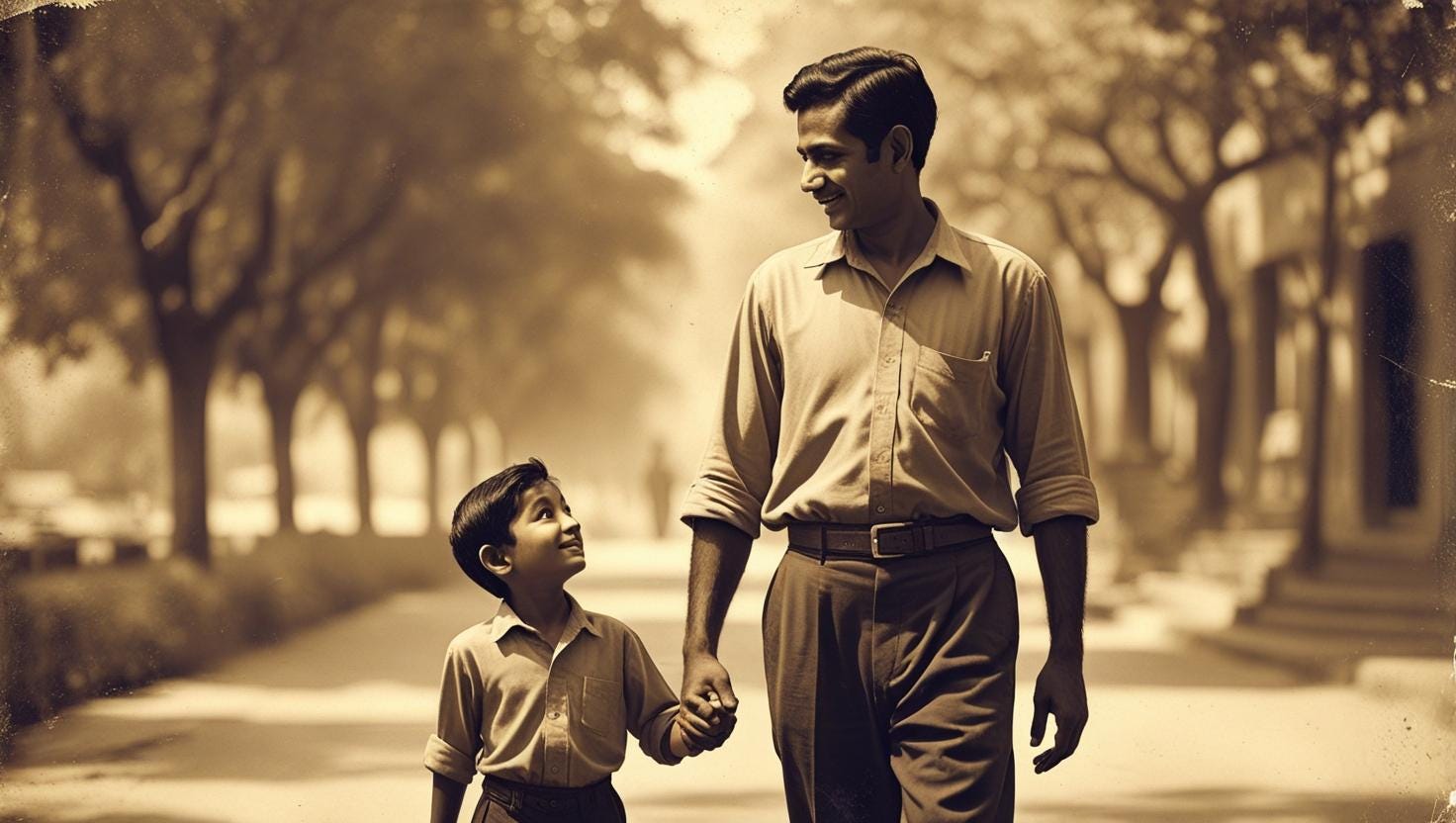
My father was a good man. A highly principled man. And a cautious man.
Somewhere along the way, I absorbed his constant refrain:
“We Panjwanis aren’t cut out for business.”
He didn’t mean it as an insult. It was a protective shield, forged from watching family members try - and fail. In our family, security was the holy grail. You worked for someone else, you held on tight, and you prayed the job would hold you through retirement.
Ironically, we were Sindhi, a community known for trade and enterprise. But in our branch, the family script was service, not business.
And I carried that script deep into adulthood.
Even as I rose through the ranks in the corporate world, earned titles, and made money my parents could have never imagined, there was a part of me that knew. I was meant to build something of my own.
But I stayed.
Stayed in jobs that drained me. Stayed in roles I had outgrown. Stayed in safety because the script was louder than the calling.
And then came the tsunami.
The Wave That Changed Everything
When you watch an ocean swallow everything around you, something shifts.
Surviving the 2004 tsunami with my family didn’t immediately erase my fear, but it made one truth unavoidable:
Life will take what it wants. You don’t get to control that. But you do get to choose how you spend what’s left.
It was four years after my father’s passing. The tsunami forced me to face a harder question:
When I reached the end of my life, would I be left with a list of achievements—or a list of regrets?
And as I watched my wife and children survive that day, I realized I was given a gift: another chance to live fully with them, to build something meaningful, to honor the precious time we still had together.
I didn’t want to waste it hiding behind safety any longer.
So I bet on myself.
It Didn’t Go As Planned
My first two ventures? They failed.
Not because of the so-called family curse. But because of my own mindset: stubborn, naïve, and terrified all at once.
I realized it was never about whether we Panjwanis could succeed in business. It was about the limitations around prosperity, identity, and worth that I had inherited - and never questioned.
Those limitations showed up in my decisions, my leadership, my capacity to receive, and my willingness to risk.
It wasn’t the curse that needed breaking. It was the story.
Why Am I Telling You This?
Because I coach leaders every week who are quietly living this tension:
They’ve made it. The world sees them as successful. But inside, they know they’ve outgrown where they are.
They tell themselves:
“After this bonus, I’ll leave.”
“Once the kids are settled, I’ll consider it.”
“When I’m more ready, I’ll finally take the leap.”
They call it planning. But often, it’s the family voice whispering: “Who do you think you are?”
What I’ve Learned
Leaving isn’t about recklessness. It’s about alignment.
It’s about noticing the voices you’ve inherited, and deciding which ones get to stay.
You don’t need a tsunami to give you permission to live the way you’re meant to.
You don’t need to wait for the “perfect moment.”
You don’t need your father’s ghost, or anyone else’s, to sign off on your freedom.
You just need to trust that the version of you who built this life can build the next one, too.
If This Hit a Nerve
Don’t wait for a wave to wash away your excuses.
If this was forwarded to you, subscribe here to get these reflections each week: Subscribe
If you’re done letting family scripts and old fears dictate your next chapter, Go Here.
Raju Panjwani
Former Morgan Stanley MD | 5x Entrepreneur
Helping high-performing leaders live and lead with full self-authority