


You've made the move, or you're about to, and the ground is shifting under it. Everything you planned assumed the market you knew, the tools you knew, the way work gets bought. This year none of that is holding still. Somewhere at the back of your mind is the thought that you may have timed the biggest decision of your career into the worst possible week.
I did. Let me tell you what it looked like.
Seven interviews
It took me a while to accept the job at Morgan Stanley. I was on track for partnership at Price Waterhouse, about to be made senior manager, running a key engagement as a financial services specialist. A recruiter literally “pried” me out of PW. I made them work for it. I asked for three or four more interviews than they had scheduled, seven in all, because I wanted to know that running audit and controls at a Wall Street firm had teeth behind it and backing from the top brass. I went as far as the Chief Operating Officer, at my own request, so the buck would not stop at my future boss and the CFO.
Mostly, because I had heard of Goldman Sachs, but not Morgan Stanley.
What they drilled into me across those seven conversations was that this was a meritocracy. You were paid on performance. The bonus was what you worked for. For an accountant, that was a new concept. We did not make much. Salary, promotions, small increases. The jump to Morgan Stanley was mostly the prospect of a bonus, on terms nobody spelled out, with nothing guaranteed.
I said yes, and surely disappointed some people at PW doing it.
The side bet
Here is the part I did not do seven interviews on.
For about a year I had been tinkering in the stock market. Small bets. My wife was not much interested in finances, so I mostly did not consult her about our financial plan. She assumed I was good at it, I suppose.
I had met a broker through a Dale Carnegie course I was taking (and then teaching), and he was feeding me tips. I had three or four positions, on margin. Boeing, Polaroid, one I can't recall. All my eggs in those baskets. Then he put me into options, so I was exposed further still. I did not know enough. I became an expert on options later, for whatever that was worth.
I had grown ten thousand dollars into forty.
The first week
I started on October 12, straight off a week in the Bahamas with the family, which was rare for me. Monday morning I walked into the building with my right foot swollen like a football. I could barely walk, and I was starting to run a high fever. Gout, it turned out. I lost the entire first week of my new career to it.
What a start.
I came back on Monday the 19th, fully recovered and ready to shake the world.
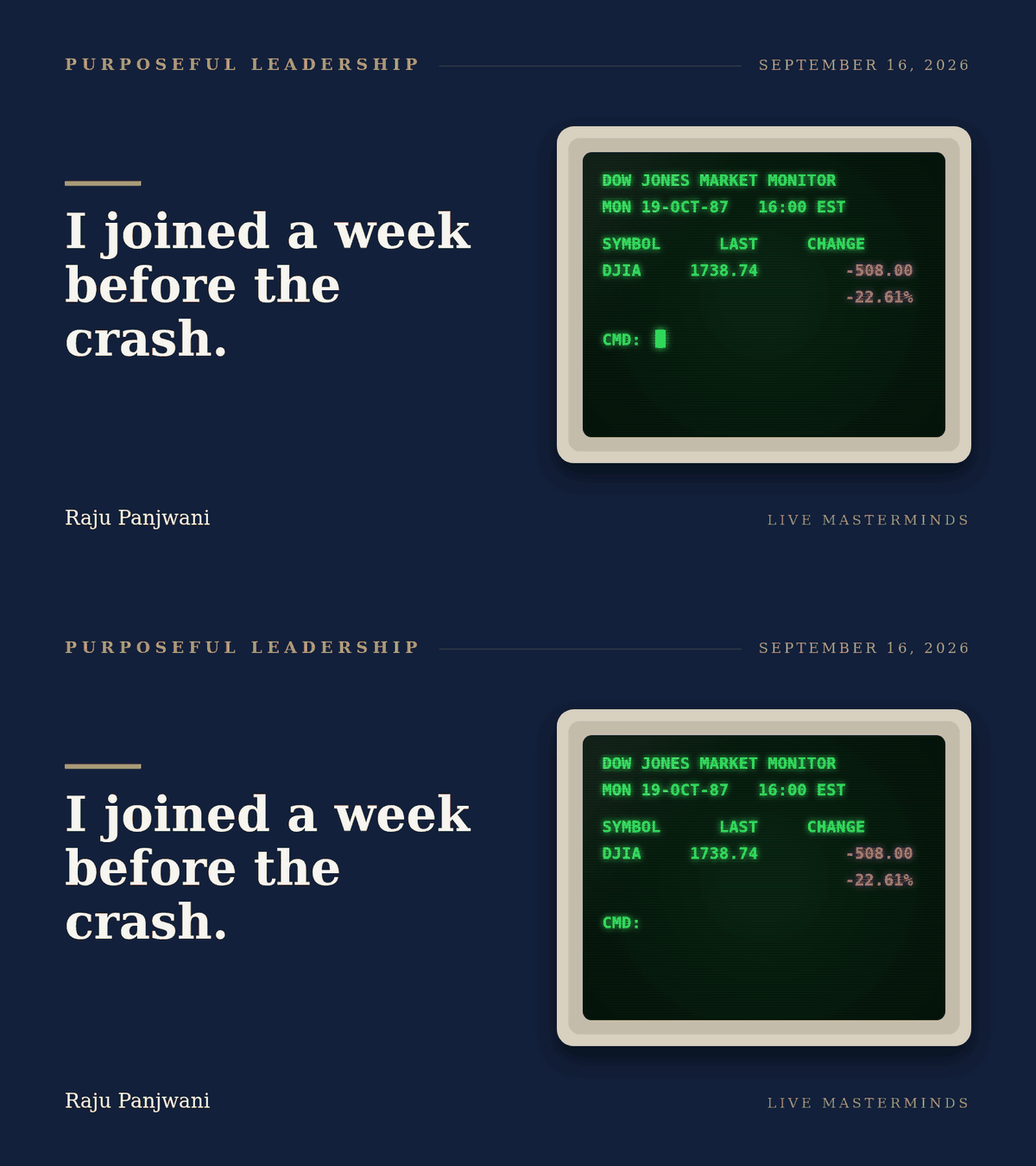
Within the hour the Dow had the biggest one-day drop in its history. I had just begun looking at the terminal outside my office, a monochrome screen, blink, blink, watching my three or four positions. The ones with margin against them. The ones with the options on top.
By the end of the day the $40,000 was gone and I owed $10,000 in additional margin calls.
I was scared to death of telling my wife. The marriage was already in trouble. I had been unhappy for three or four years and had arranged my hours so that I was rarely home when she was. Now I had this to carry as well. A couple of days later I fired the broker, as if he was to blame for all of it.
That was the start of my career at Morgan Stanley.
What I'd say to you
I stayed eighteen years. The crash never touched the thing I was actually there for, which was to build a group that did not exist yet. That was the kind of work I loved, new divisions, startups, turnarounds, and it was still there on Tuesday morning.
What the crash took was the side bet. Money I had done no diligence on, with a man I met at a Carnegie class, on positions I had not discussed with the person I shared a home with. I had put seven interviews into the job. The money on the side got none, and nobody knew it was there.
The ground is moving under you this year. AI, the speed to execution, client demands, your company demands. Sort what you're standing on into two piles. The work you were brought in to do. And the bets on the side, the ones you have not told anyone about. The first pile will be there on Tuesday. Take a hard look at the second.
And tell someone. The ten thousand dollars was survivable. Carrying it alone is what I remember.
Get your free personalized read. The Executive Leverage Scorecard, 15 questions, 3 minutes. Results are immediate.
Raju Panjwani | Founder of Live Masterminds, Inc.
I was a Managing Director at Morgan Stanley | I now work with senior leaders in IT services and technology firms, on becoming the leader the business now needs.